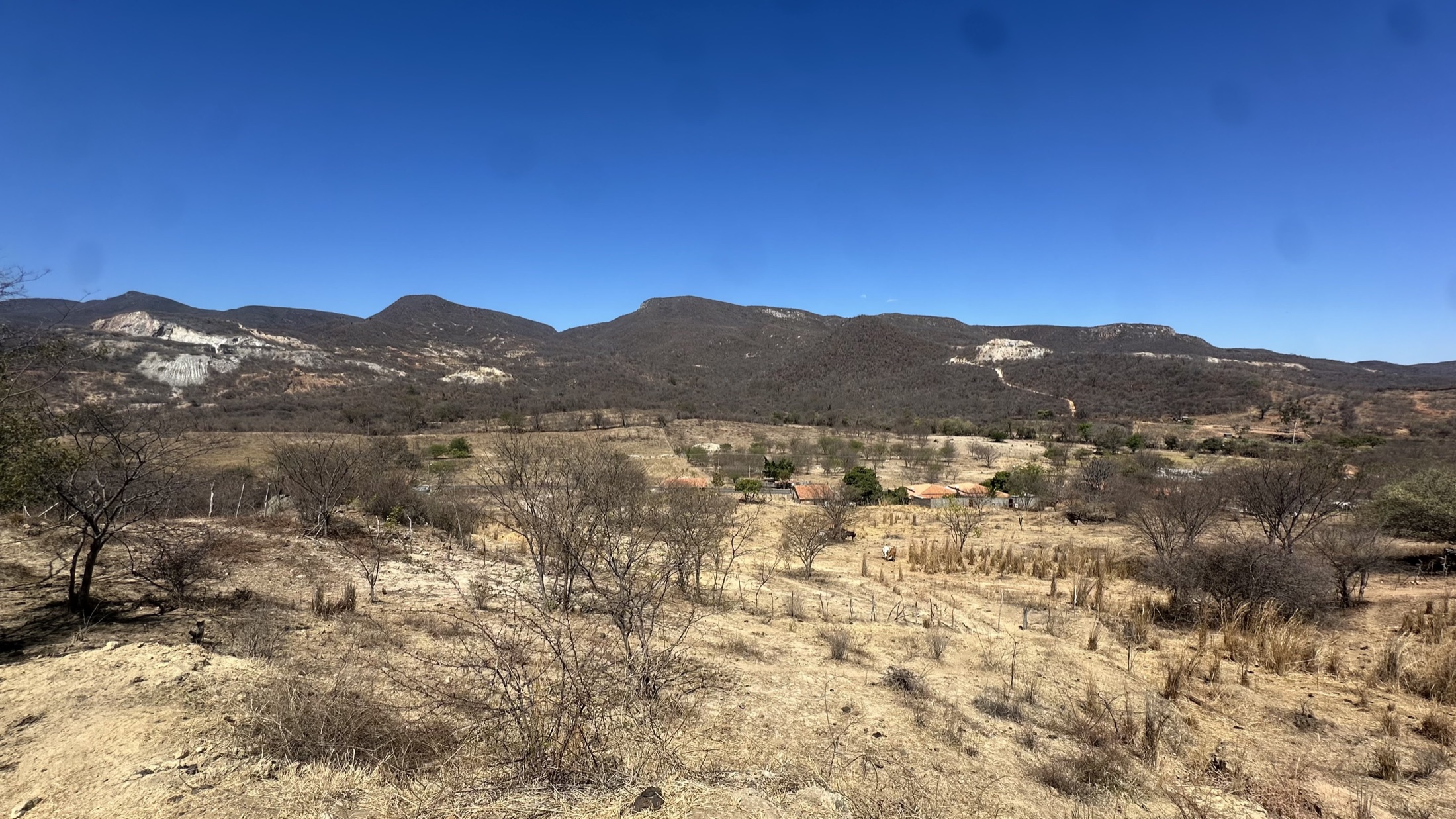
Quick Facts
- Ownership
- 100%
- Location
- Pernambuco State, Brazil
- Deposit style
- Volcanogenic massive sulphide (VMS)-style system
- Historical work
- 5,900m diamond drilling
- Next work programme
- 2,500m diamond drilling and EM geophysics
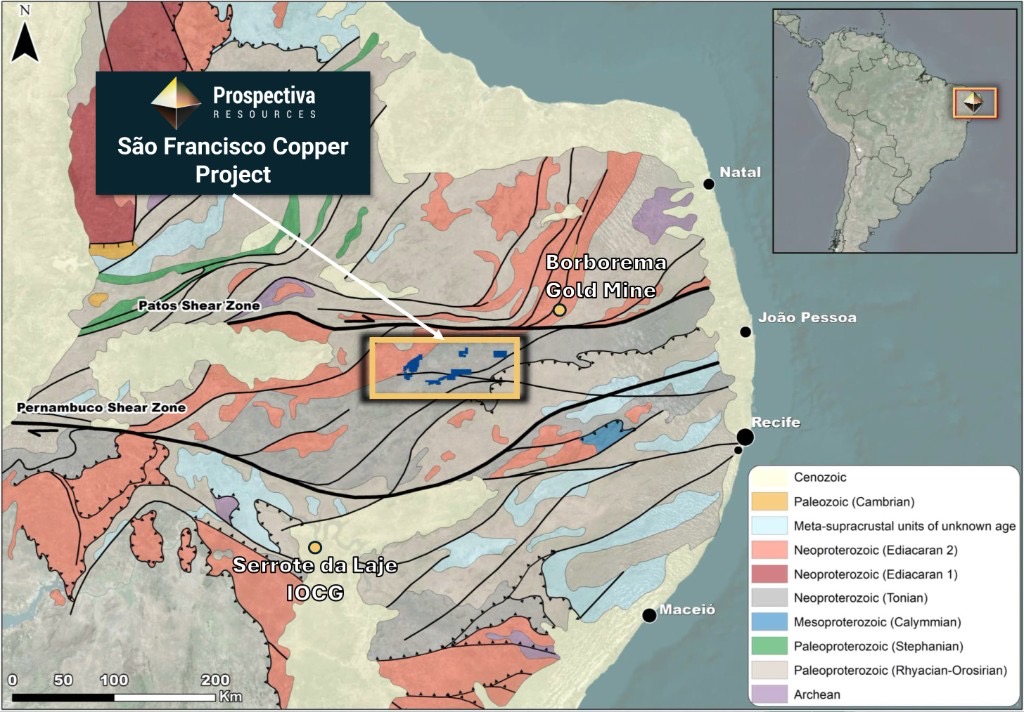
São Francisco within the Borborema Belt, Pernambuco State, Brazil
Key Highlights
Historical drilling at São Francisco includes 7.50m @ 6.41% Cu and 0.36 g/t Au and 7.53m @ 3.83% Cu and 0.36 g/t Au.1
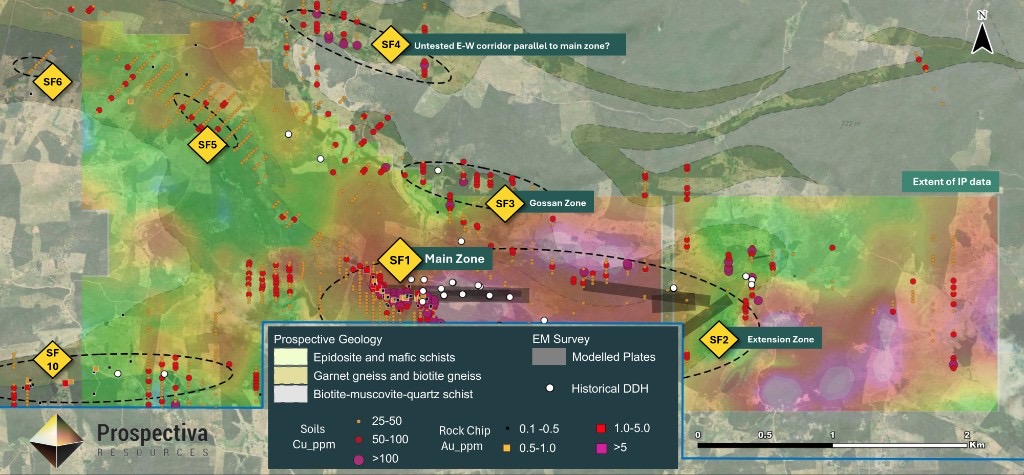
Drilling and surface work have defined a Cu-Au mineralised trend of approximately 3 km, with prospective extensions requiring further exploration.
São Francisco is interpreted as a deformed and metamorphosed VMS-style copper-gold system hosted within the Borborema Belt.
IP chargeability and EM conductor anomalies provide priority targets for testing massive to semi-massive sulphide mineralisation.
Historical high-grade intersections occur from relatively shallow depths, supporting a focused programme of step-out and extension drilling.
Prospectiva’s next phase of exploration is designed to test priority EM, IP and geochemical targets along the São Francisco trend.
The São Francisco Project is Prospectiva’s flagship copper-gold project, located in Pernambuco State within Brazil’s Borborema Belt. The project is interpreted as a deformed and metamorphosed volcanogenic massive sulphide (VMS)-style system, hosting high-grade copper mineralisation with associated gold, silver and base-metal credits.
Historical drilling has confirmed near-surface, copper-dominant mineralisation over an approximately 3 km defined Cu-Au mineralised trend, with prospective extensions requiring further exploration.1 The system remains open along strike and at depth, with untested geophysical, geochemical and structural targets providing significant opportunities for further exploration.
São Francisco is the most advanced project within Prospectiva’s northeastern Brazil portfolio and is the primary focus of the Company’s planned Phase 1 diamond drilling campaign. The next phase of work is designed to test extensions to the known mineralised lenses, validate geophysical targets and support the development of a coherent geological and exploration model.
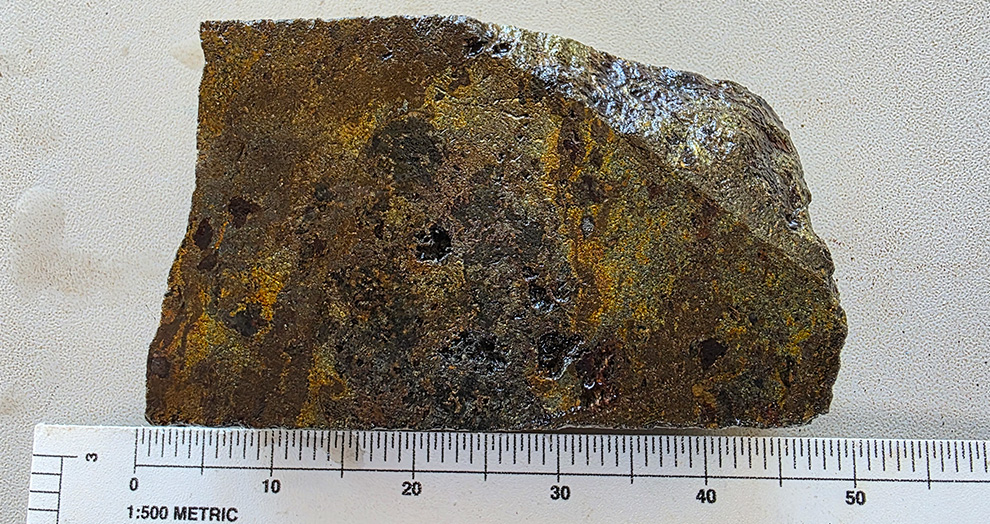
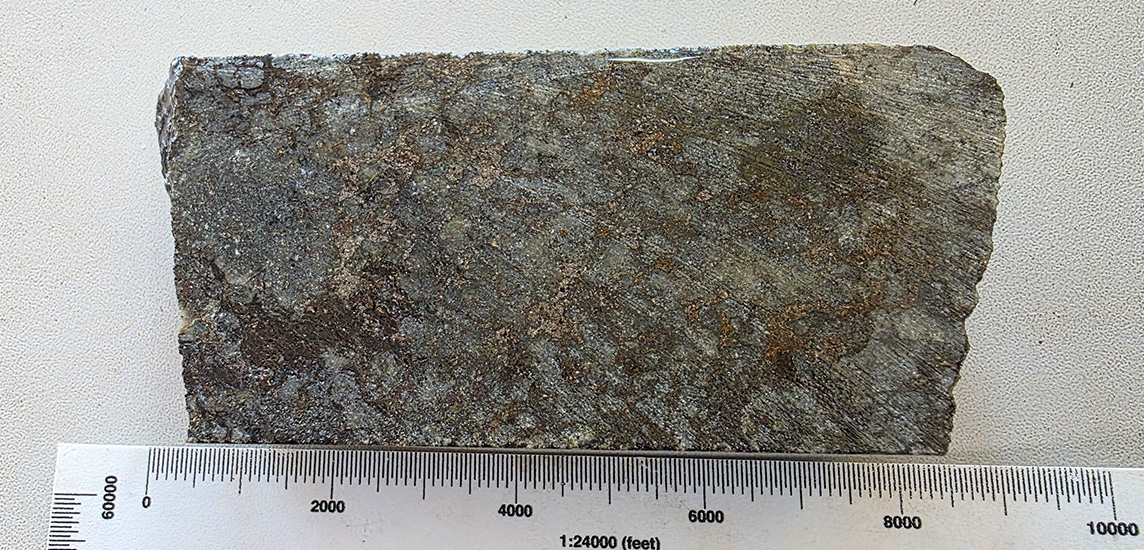
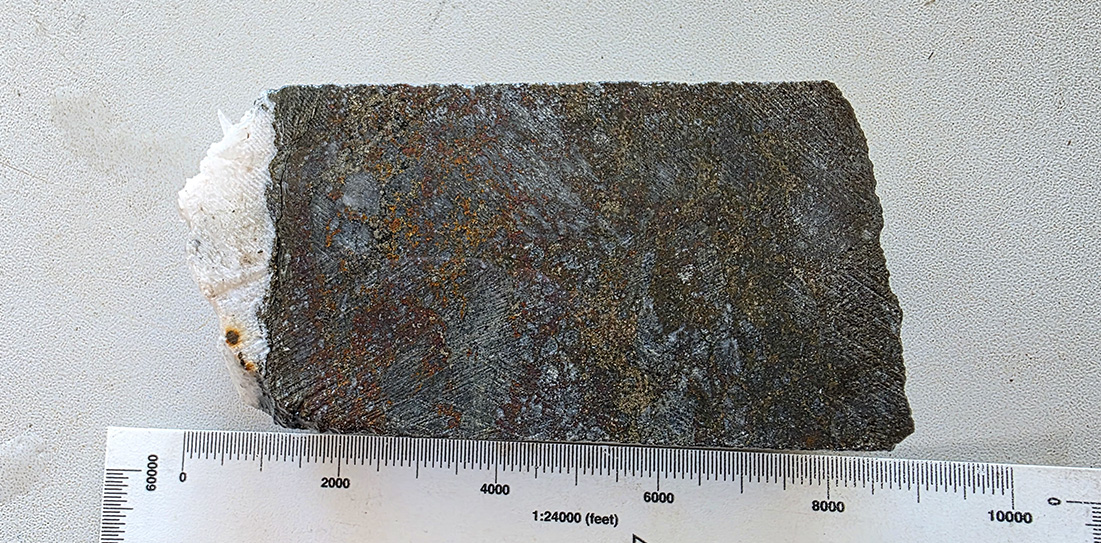
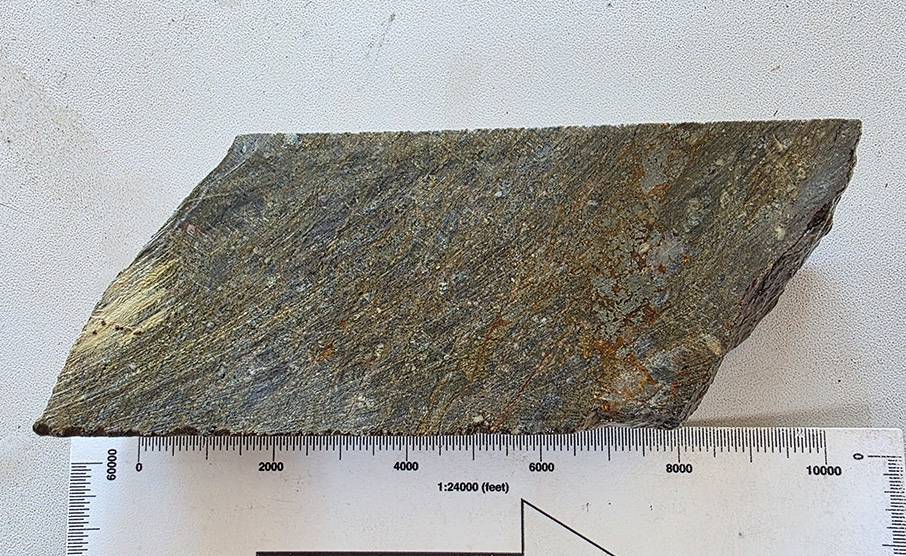
Core Photos1
Selected drill core photographs illustrate the style and grade of copper-gold sulphide mineralisation intersected at São Francisco, from high-grade massive sulphide to lower-grade disseminated zones. Further petrographic information is available on request. The assays shown are from selected sample intervals.2
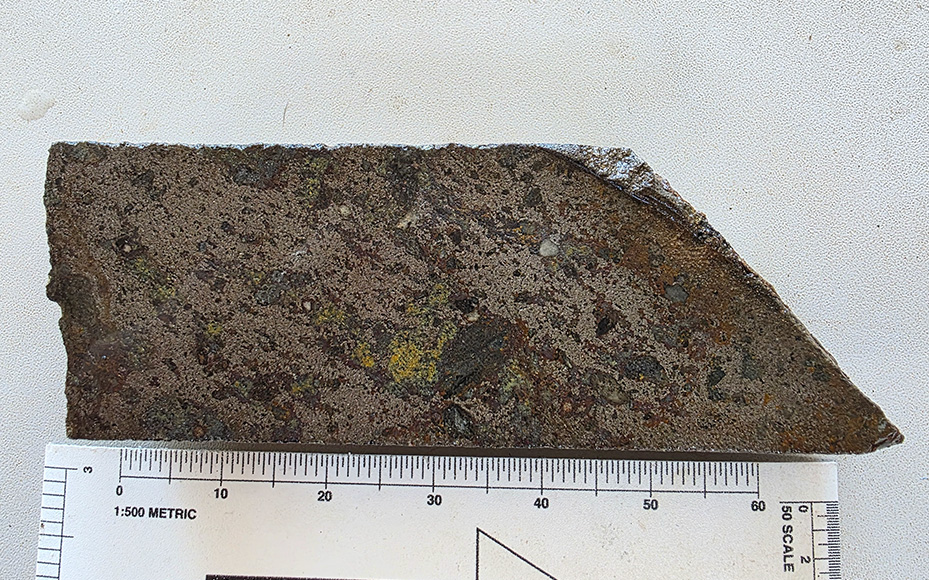
SF_005
From 45.00 m to 45.81 m
11.74% Cu, 0.759 g/t Au, 30.5 g/t Ag, 61 ppm As, 171 ppm Co, >1% Zn, 257 ppm Pb
SF_006
From 74.00 m to 75.00 m
13.1% Cu, 0.617 g/t Au, 30.4 g/t Ag, 154 ppm As, 210 ppm Co, >1% Zn, 107 ppm Pb
SF_016
From 116.35 m to 117.35 m
7.24% Cu, 0.662 g/t Au, 16.8 g/t Ag, 19 ppm As, 0.72% Zn, 119 ppm Pb
SF_024
From 141.92 m to 142.55 m
>1% Cu, 0.343 g/t Au, 8.3 g/t Ag, 7 ppm As, 0.251% Zn, 155 ppm Pb
SF_014
From 20.00 m to 21.00 m
0.636% Cu, 0.042 g/t Au, 1.4 g/t Ag, 6 ppm As, 0.413% Zn, 196 ppm Pb
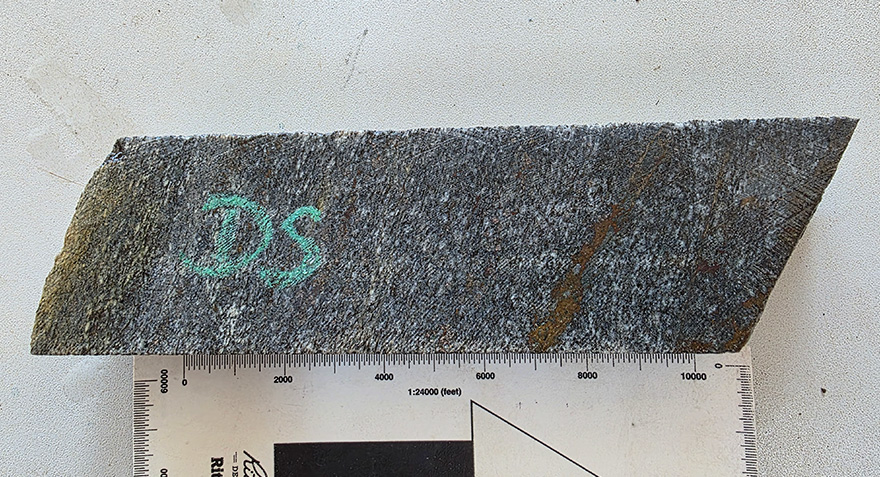
SF_026
From 296.00 m to 297.00 m
0.61% Cu, 0.029 g/t Au, 0.8 g/t Ag, <5 ppm As, 3 ppm Co, 570 ppm Zn, 195 ppm Pb
Notes
- Historical exploration and drill results referenced above were generated by Yamana Gold Corp. The broader regional exploration programme was conducted between 2011 and 2022, with the reported diamond drilling completed during later drill campaigns. These results are disclosed in the Company’s NI 43-101 Technical Report on the Borborema Project. ↩
- The assay values shown alongside the core photographs are selected drill core sample assays, shown for illustrative purposes, and are not necessarily representative of the full mineralised interval. ↩
At São Francisco, Yamana’s work identified extensive gossanous zones enriched in copper, zinc and iron. Follow-up diamond drilling confirmed the presence of massive to semi-massive sulphide mineralisation, including high-grade copper-gold intersections, with mineralisation interpreted over at least 2.2 km of strike and remaining open along strike and at depth. The project was further advanced through integrated geophysical and geochemical targeting, with approximately 29 km of induced polarisation survey lines, soil geochemistry and XRF data used to define chargeability anomalies and structural features that remain important inputs into Prospectiva’s current exploration model.1
In 2023, the licences were transferred to Pan American Silver following its acquisition of Yamana Gold. Although Pan American did not complete significant new exploration on the project, the tenure and historical technical datasets were maintained and subsequently transferred as part of Prospectiva’s acquisition of the Borborema Project in 2026. Prospectiva has since consolidated, reviewed and validated the historical data, rebuilding the geological model and prioritising drill-ready targets ahead of the next phase of exploration.
Yamana Gold completed regional reconnaissance, geological mapping, rock-chip sampling, soil geochemistry, trenching and shallow drilling, leading to the initial recognition of district-scale gold, copper and polymetallic potential and the definition of mineralised corridors.
Yamana Gold carried out district-scale target generation, XRF screening, surface sampling and RAB drilling, expanding the target pipeline across multiple corridors including São Francisco.
Yamana Gold conducted surface geochemistry and diamond drilling at São Francisco, resulting in the discovery of massive to semi-massive Cu-Au sulphide mineralisation.
Yamana Gold advanced IP geophysics, soil sampling, XRF analysis and further drilling, integrating geophysics and geochemistry into a coherent target model.
Pan American Silver held the licences and preserved the historical technical datasets, which were subsequently transferred to Prospectiva.
Prospectiva Resources is undertaking data validation, EM geophysics, geological modelling, target ranking and drill planning, focused on expanding São Francisco and advancing district-scale targets.
Geological Overview
São Francisco is hosted within the Borborema Belt, a major Precambrian geological province in northeastern Brazil. The project area comprises deformed and metamorphosed volcanic-sedimentary rocks, including schists and gneisses, interpreted to form part of a prospective palaeoseafloor sequence.
The mineralised system is interpreted as a deformed and metamorphosed VMS-style copper-gold system. Mineralisation appears to be stratigraphically and structurally controlled, occurring within a favourable sulphide-bearing horizon that has been subsequently folded, sheared and metamorphosed. This structural overprint is significant, as it may have thickened, repeated or remobilised the original sulphide lenses, creating high-grade shoots and additional exploration targets.
Recent geological work has focused on identifying the position of the prospective palaeoseafloor horizon, integrating historical drilling with geophysical conductors and refining the three-dimensional geometry of the mineralised system.
Mineralisation
Copper-gold mineralisation at São Francisco is characterised by sulphide-rich intervals dominated by chalcopyrite and pyrrhotite, with pyrite and locally sphalerite also present. Mineralisation occurs as disseminated sulphides, stringers, veinlets, breccia fill, semi-massive sulphide and massive sulphide.
The highest-grade copper intervals are associated with chalcopyrite-rich sulphide zones. Gold is present as an important associated credit, while silver and other base metals provide additional geochemical vectors towards mineralisation.
Weathered and oxide mineralisation may include iron oxides, gossanous textures and boxwork material interpreted to represent weathered sulphide. These features are important exploration indicators, as they may mark the surface expression of sulphide-bearing horizons at depth.
Prospectiva’s exploration model for São Francisco is based on a deformed and metamorphosed VMS-style copper-gold system developed along a favourable palaeoseafloor horizon. In this model, original sulphide accumulation occurred at or near the ancient seafloor, potentially associated with hydrothermal venting, exhalative sulphide deposition and related footwall alteration.
Subsequent deformation and metamorphism modified the original geometry of the system. Folding, shearing and remobilisation may have repeated or thickened the sulphide horizon, producing structurally controlled high-grade zones. Exploration is therefore not limited to simple down-dip or along-strike extensions of known intercepts — additional targets may occur where the prospective horizon is folded, repeated, offset or structurally thickened.
| Exploration Vector | Significance |
|---|---|
| Palaeoseafloor position | Defines the prospective stratigraphic horizon for VMS-style mineralisation |
| Conductive EM plates | Potential massive to semi-massive sulphide targets |
| IP chargeability anomalies | Possible disseminated sulphide zones and alteration halos |
| Cu-Au-Ag-Zn geochemistry | Direct vector towards sulphide mineralisation |
| Fe-oxide boxworks and gossans | Possible surface expression of weathered sulphide |
| Structural thickening zones | Potential sites for higher-grade shoots |
Drill Programme
The next phase of drilling is designed to test these geological, geochemical and geophysical vectors together. Prospectiva’s planned drill programme comprises 2,500m of Phase 1 diamond drilling together with downhole and surface EM geophysics, targeting extensions to the known mineralised lenses and priority untested conductors. Downhole geophysics will be used to refine targeting during the programme and to identify off-hole conductors that may represent additional sulphide lenses.
Key Historical Drill Results1
Historical diamond drilling at São Francisco has intersected high-grade copper-gold sulphide mineralisation from near-surface depths. Results include multiple massive to semi-massive sulphide intervals grading more than 5% Cu, with associated gold, zinc and silver credits. These results confirm the presence of a high-grade copper-gold system and provide the foundation for Prospectiva’s next phase of exploration.
| DHID | From (m) | To (m) | Length (m) | Cu % | Au g/t | Ag g/t | Pb % | Zn % |
|---|---|---|---|---|---|---|---|---|
| SF_005 | 43.21 | 48.12 | 4.91 | 4.45 | 0.25 | 10.82 | 0.02 | 0.41 |
| SF_005 (incl.) | 44.18 | 46.54 | 2.36 | 9.02 | 0.49 | 21.58 | 0.02 | 0.79 |
| SF_006 | 70.37 | 77.87 | 7.50 | 6.41 | 0.36 | 15.28 | 0.02 | 0.50 |
| SF_006 (incl.) | 73.28 | 77.00 | 3.72 | 12.24 | 0.69 | 29.17 | 0.02 | 0.96 |
| SF_008 | 90.00 | 94.55 | 4.55 | 5.81 | 0.48 | 14.01 | 0.03 | 0.54 |
| SF_008 (incl.) | 90.89 | 92.18 | 1.29 | 13.48 | 0.79 | 30.71 | 0.04 | 1.00 |
| SF_012 | 76.80 | 84.33 | 7.53 | 3.83 | 0.36 | 9.52 | 0.03 | 0.26 |
| SF_012 (incl.) | 78.61 | 83.62 | 5.01 | 5.62 | 0.53 | 14.02 | 0.05 | 0.38 |
| SF_016 | 116.35 | 122.00 | 5.65 | 1.83 | 0.18 | 4.22 | 0.01 | 0.17 |
| SF_016 (incl.) | 116.35 | 118.00 | 1.65 | 5.50 | 0.55 | 13.09 | 0.01 | 0.53 |
| SF_016 (incl.) | 116.35 | 117.35 | 1.00 | 7.42 | 0.66 | 16.80 | 0.01 | 0.72 |
Significant intersections calculated using a 0.1% Cu cut-off and a minimum downhole width of 1m. Intervals comprise contiguous samples above the reporting threshold; no internal dilution was applied. Assumed 100% recovery; no metallurgical inputs considered. Grades are reported as primary assayed values (Cu, Au, Ag, Pb, Zn); no copper-equivalent values are reported. Source: NI 43-101 Technical Report.
NI 43-101 Technical Report
Historical technical information referenced above is disclosed in the Company’s NI 43-101 Technical Report on the Borborema Project, available in the Projects section.